Session 1: Salem, 1692: the real story
Objectives
- Understand the historical context of the Salem witch trials
- Use past tenses and passive forms to tell real events
- Give a short oral news flash
Warm-up
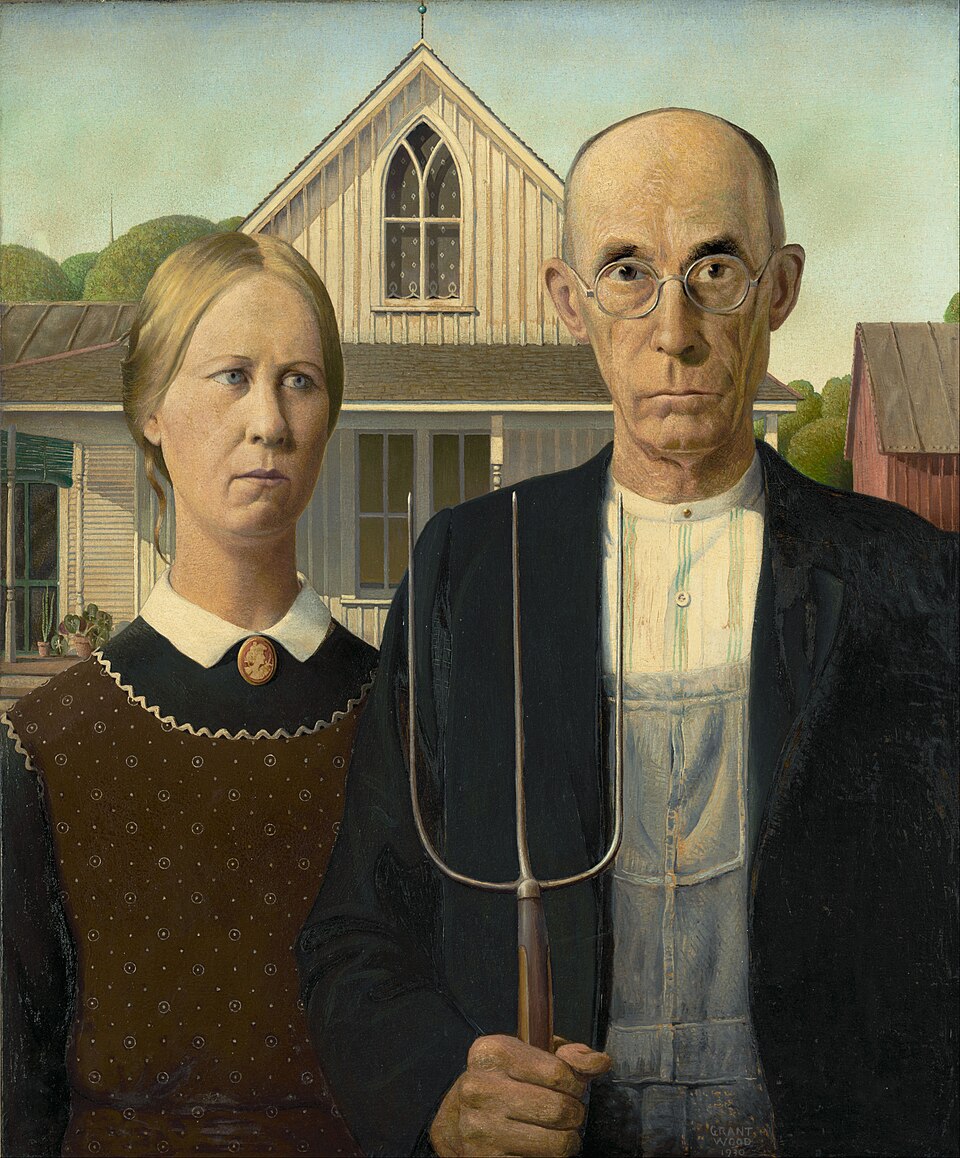
Students see the word witch hunt. In pairs: what does it mean today? Where have you heard it? Then: what was a real witch hunt?
Documents
- Salem is a Puritan community in the Massachusetts Bay Colony. Life is strict, winters are hard, and neighbours quarrel over land.
- In early 1692, two girls in the house of the minister Samuel Parris, his daughter Betty and his niece Abigail Williams, start having strange fits. A doctor suggests an "evil hand".
- The first three women accused are Sarah Good, Sarah Osborne and Tituba, an enslaved woman in the Parris household. Tituba confesses and names others.
- A special court, the Court of Oyer and Terminer, is set up in 1692. It accepts "spectral evidence": a girl says she sees the spirit of the accused attacking her.
- More than 200 people are accused. Nineteen are hanged, among them the farmer John Proctor in August 1692. Giles Corey, who refuses to plead, is pressed to death under heavy stones. Several others die in jail.
- In 1711, the colony reverses many convictions and pays compensation. In 2022, Massachusetts officially cleared the last convicted woman, Elizabeth Johnson Jr.
Activities
- Timeline: put eight events in order and justify with a connector (first, then, as a result, eventually).
- Grammar: the passive to tell history. Sarah Good was accused. Nineteen people were hanged. The convictions were reversed.
- Who were the accused? Students notice that the first women accused were poor, isolated or enslaved. What does this tell us about scapegoats?
- Intermediary task (oral production): you are a reporter in Salem in 1692. Record a 1 minute radio news flash.
More activities
Pre-reading: a Puritan sermon
Jonathan Edwards preached this sermon in 1741, half a century after Salem, but it shows the Puritan vision of sin and God.
Jonathan Edwards, "Sinners in the Hands of an Angry God", sermon preached at Enfield, Connecticut, 8 July 1741 (public domain)
- Underline the images of fire and danger. What do they make the listener feel?
- Find the simile. What is the sinner compared to? Why this animal?
- Which verbs and adjectives show God's anger?
- Quickwrite (five minutes): how would a community that hears such sermons every week react to a rumour of witchcraft?
- The image of... suggests that...
- Edwards compares the sinner to... in order to...
- The word choice creates a feeling of...
- A community that hears this every week would...
Answer key
- fire, the pit of hell, wrath that burns
- a spider or a loathsome insect: small, helpless, disgusting
- abhors, dreadfully provoked, wrath, burns
- Open answer: fear, guilt, readiness to see the Devil everywhere.
Game: How Puritan are you? (Salem, 1692)
Imagine you are a villager in Salem in 1692. This quiz is about the period, not about your own life. Answer yes or no for your character, then count the points.
- Your character works hard six days a week and rests on the Sabbath.
- Your character goes to the meeting house every Sunday for a sermon of several hours.
- Your character dances in the forest at night.
- Your character reads the Bible at home with the family.
- Your character wears bright colours and lace to show off.
- Your character reports a neighbour who misses church.
Score: one point for each yes to questions 1, 2, 4, 6 and for each no to questions 3 and 5. The higher the score, the more your character fits the strict rules of Salem. Then discuss: was it easy to be a good Puritan? What happened to people who did not fit?
Puritanism stations
Groups move around four tables, five minutes each, and fill in a note sheet: one fact, one keyword, one question.
- Faith: Puritans wanted to purify the Church of England. Many sailed from England to build a godly community in New England; the Massachusetts Bay Colony was founded in 1630.
- The Sabbath: Sunday is a day of rest and prayer. Work, games and travel are forbidden. Absence from church is noticed.
- Community and control: the church and the law are closely linked. Neighbours watch each other, and sin is a public matter.
- Punishment: public punishments such as the stocks shame wrongdoers in front of everyone. Reputation is everything.
- At this station, we learnt that...
- The keyword is... because...
- Our question is...
- This explains why, in the play,...
Sentence starters
- Breaking news from Salem Village:
- According to witnesses,...
- The court has decided that...
- As a result, many villagers...
- Nobody knows yet whether...
Role play
Pairs: Student A is a reporter from Boston, Student B is a Salem villager in 1692. The reporter asks about the girls, the accused and the court. The villager answers, frightened and convinced.
Gap-fill worksheet

- Salem was a strict ______ community.
- Betty Parris and Abigail Williams started having strange ______.
- Tituba ______ and named other people.
- The court accepted ______: visions that nobody else could see.
- More than 200 people were ______.
- Nineteen people were ______.
- A ______ is a person blamed for the problems of a group.
- In 1711, the colony paid ______ to some families.
Answer key
- Puritan
- fits
- confessed
- spectral evidence
- accused
- hanged
- scapegoat
- compensation
Homework
Write the script of your radio news flash (120 words) using at least four passive forms.
Watch the film at home
The Crucible (1996), directed by Nicholas Hytner. In France, the film is called La Chasse aux sorcières.
- Where to watch: see the list of streaming and rental options on JustWatch France.
- DVD: ask at your local library or médiathèque.
- Official trailer: on the Apple TV page of the film.
- Scenes to watch: Act I: the girls dance in the forest at night (the opening of the film). Act II: the officers arrest Elizabeth at home. Act III: in court, the girls turn against Mary Warren. Act IV: Proctor tears his confession and walks to the gallows.
Watch with English subtitles if you can.
Assessment grid
| Criteria | Level 1 | Level 2 | Level 3 | Level 4 |
|---|---|---|---|---|
| Historical facts | Wrong or missing | Some facts | Accurate facts | Accurate, precise and dated |
| Past and passive | Rarely correct | Often correct | Mostly correct | Correct and varied |
| Fluency | Many long pauses | Some pauses | Mostly fluent | Fluent and lively |
| Pronunciation | Hard to understand | Understandable | Clear | Clear with good intonation |
Terminale LV1 · C1/C2 extension track
For strong or anglophone students. Primary sources from 1692 are read in their original spelling.
Extended extract
Margaret Jacobs, letter to her father, 1692 (public domain)
Critical analysis
- What pressure produced false confessions?
- How does the syntax show panic?
- What does this document add to Miller's play?
Nuanced vocabulary
| Word or phrase | Meaning and use |
|---|---|
| coerced confession | an admission obtained by pressure |
| spectral evidence | testimony about visions of spirits |
| primary source | a document from the time studied |
| arguably | to present a view as defensible but open to debate |
| to hinge on | to depend entirely on |